Multifunctional Nanostructured Materials
Synergistic effects of Sb doping and nanostructuring on spark plasma-sintered ZrNiSn thermoelectrics
Publication Details
Journal: Material Advances
Authors: José Luis Garrido-Álvarez; Javier López-García; Oscar Juan Dura; Matthias Schrade; Anthoula Poulia; Carlos F. Gutierrez-González; Marta Suárez; Jesús Ángel Blanco; Joao Elías Rodrigues; Alaa Adawy; Víctor Vega; Ole Martin Lovvik; Anette Eleonora Gunnaes; Cristina Echevarria-Bonet.
Impact Factor: 5.8
Abstract
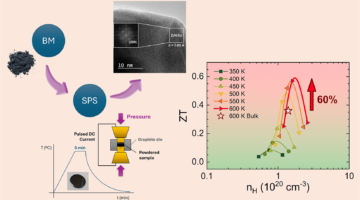
Nanostructured ZrNiSn and ZrNiSn1−xSbx (x = 0.02 and 0.05) half-Heusler alloys were successfully synthesized via mechanical milling followed by spark plasma sintering. All samples crystallized in the expected MgAgAs-type crystal structure (space group F4̄3m) and retained their nanostructured powder morphology post-sintering. Thermoelectric measurements revealed that the mechanical milling effectively reduced lattice thermal conductivity, while Sb doping significantly enhances the electrical conductivity in the ZrNiSn system. However, extending the milling time beyond 5 hours led to reduced performance due to the increased structural disorder without further thermal conductivity decrease. Hall-effect measurements yielded a relatively low effective carrier mass of around 0.7–1.3me, which accounts for the observed reduction in the Seebeck coefficient. The optimal Sb doping level was found to be x = 0.02. At this doping level, a substantial improvement in thermoelectric performance is detected with a maximum thermoelectric figure of merit (ZT) of approximately 0.6 at 600 K (two fold that of the undoped sample) and a 60% improvement over the unmilled ZrNiSn0.98Sb0.02 alloy. These results highlight the synergistic effects of controlled Sb doping and nanostructuring via mechanical milling on optimizing the thermoelectric properties of ZrNiSn-based half-Heuslers.
Bactericidal multilayer fibrous titanium phosphate nanocomposites with embedded silver nanoparticles by optimized “green” synthesis
Publication Details
Journal: RSC Advances
Authors: Tetiana Hubetska; Olena Khainakova; Sara González-Fernández; Belén Cabal; Natalia Kobylinska; Adolfo Fernández.
Impact Factor: 6.1
Abstract
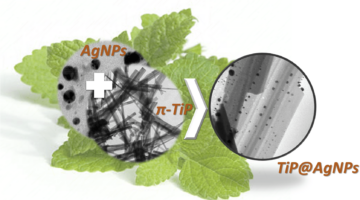
In this study, novel nanocomposites based on fibrous titanium phosphate (π-TiP) functionalized with biosynthesized silver nanoparticles (AgNPs) were successfully developed, and their bactericidal potential was systematically evaluated. The nanocomposites (TiP@AgNPs) were prepared via the in situ treatment of π-TiP nanofibres with AgNPs synthesized using Melissa officinalis leaf extract and two silver(i) precursors (AgNO3 and CH3COOAg) at various concentrations (1 mM, 5 mM, and 10 mM).
The biosynthesized AgNPs were found to be spherical (10–15 nm), exhibiting a formation rate and size directly dependent on the silver(i) precursor. Significantly higher reaction rates were achieved with the use of CH3COOAg. Additionally, the as-prepared AgNPs exhibited nucleoprotective properties due to the formation of a ‘core–shell’ structure, which prevented the aggregation of the resulting nanoparticles. TEM images of TiP@AgNPs nanocomposites indicate a uniform distribution of monodisperse AgNPs on the surfaces of fibres. The amount of AgNPs loaded onto fibrous surfaces was found to be directly proportional to the initial concentration of the AgNPs. At the same time, FTIR and TGA/MS methods confirmed the presence of Melissa leaf extract components in the fibre cavities and on the nanoparticle surfaces. In vitro antibacterial tests demonstrated that the obtained nanocomposites possessed potent, dose- and time-dependent antibacterial activity against both Gram-negative (Escherichia coli) and Gram-positive (Staphylococcus aureus) bacteria.
Furthermore, the nanocomposites demonstrated strain-specific selectivity against the Gram-negative Escherichia coli compared to the Gram-positive Staphylococcus aureus. Finally, the TiP@AgNPs nanocomposite synthesized using 10 mM of CH3COOAg exhibited the most efficient bactericidal performance while remaining within the non-toxic threshold for bactericidal materials. Thus, these nanocomposites hold great promise as highly effective and controllable antibacterial agents for biomedical applications.
Acetatobis(l-arginine)copper(ii) acetate trihydrate: synthesis from l-argininium acetate, structural-electronic insights and in vitro antimicrobial activity
Publication Details
Journal: RSC Advances
Authors: Amani Direm, Salima Samai, Hamza Athmani, Mohammed S.M. Abdelbaky, Cemal Parlak, Olufunso Abosede, Santiago García-Granda, Ponnadurai Ramasami
Impact Factor: 6.1
Abstract
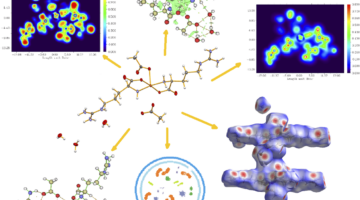
Acetatobis(l-arginine)copper(ii) acetate trihydrate, [Cu(OAc)(Arg)2](OAc)·3H2O (compound II), was synthesized via a complexation reaction using l-argininium acetate (compound I) as the precursor. Single-crystal X-ray diffraction analysis showed that both compounds crystallize in the monoclinic space group P21. A detailed structural analysis revealed a robust 3D hydrogen-bonding network, where lattice water molecules and free acetate anions act as structural bridges, stabilizing the guanidinium side chains of the arginine ligands. A thorough Hirshfeld surface (HS) analysis, quantifying the contribution of N–H⋯O and O–H⋯O H-bonds in addition to non-classical H⋯H, H⋯C/C⋯H and H⋯N/N⋯H contacts to the overall lattice stability, was employed to explore the intermolecular interactions within the crystal structure in comparison with DUYCAB’s.
The electronic properties and the nature of the bonds in (II) were investigated using topological analysis (QTAIM). Furthermore, reactivity descriptors, molecular electrostatic potential (MEP), electron localization function (ELF), localized orbital locator (LOL), non-covalent interaction index (NCI) and reduced density gradient (RDG) of the studied complex were calculated and analyzed. Finally, the biological behaviors of complex (II) and its starting material (I) were evaluated by carrying out in vitro antimicrobial assays against a panel of pathogenic bacterial and fungal strains.
The results demonstrate significant inhibitory activity, suggesting that the integration of the bioactive l-arginine moiety with the copper(ii) centers may lead to enhancing the pharmacological profile of the precursor. This work provides a structural and theoretical framework for the development of arginine-based metal complexes as candidates for next-generation antimicrobial drugs.

CINN scientists collaborate with researchers from Semnan University on the design and optimisation of advanced materials for water purification
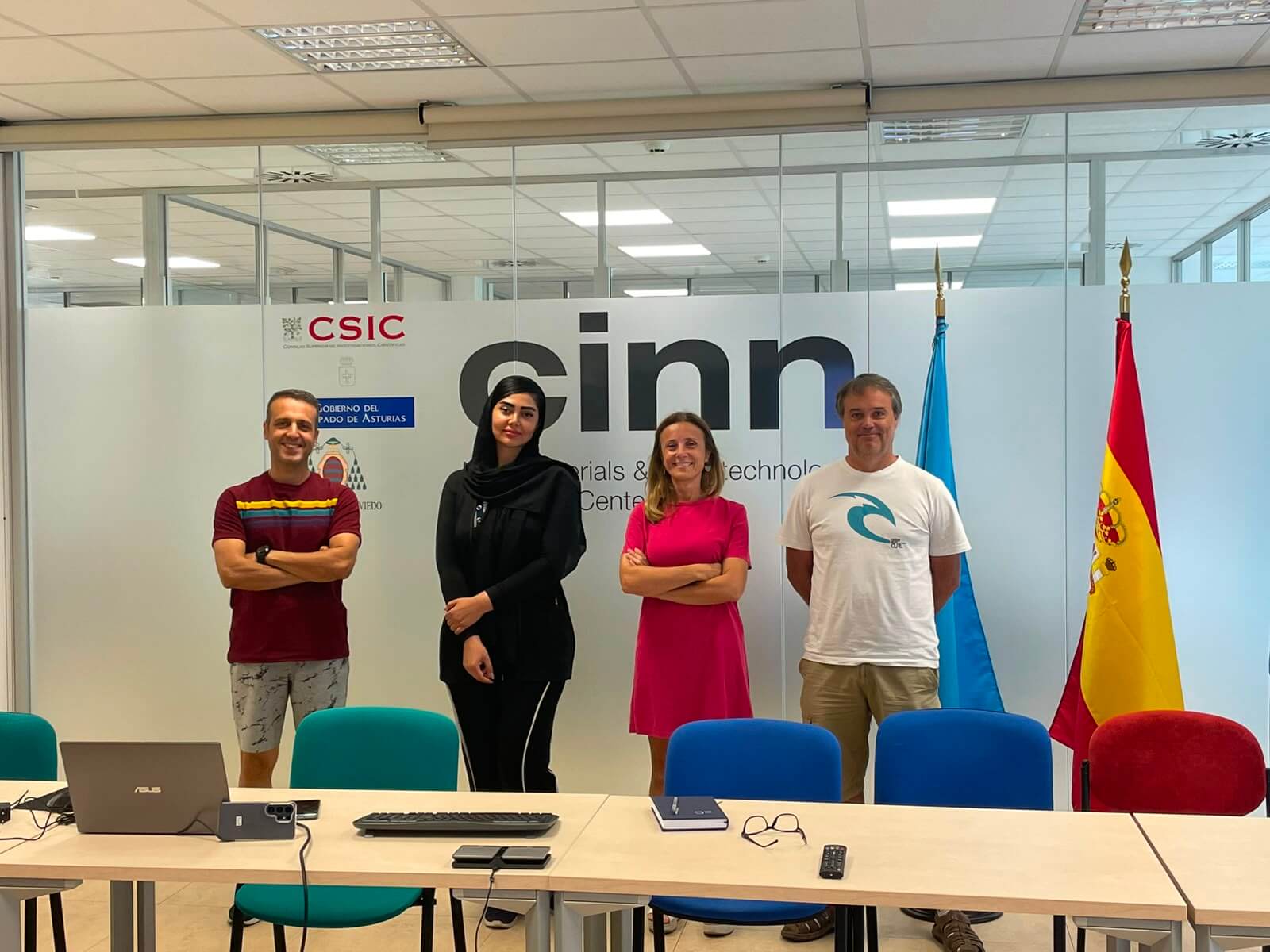
Professor Omid Mirzaee and Dra. Sanaz Alamdari, from the University of Semnan (Iran), are currently at CINN on a research visit that will run until 9 September 2026.
During their stay, they will collaborate closely with researchers from CINN’s Nanostructured Multifunctional Materials Group, Dr José Luis Menéndez and Dra. Belén Cabal, as part of the project I-COOPB25145: “Development of Nanostructured Membrane-based Adsorption
Systems for Water Crisis Management”.
This two-year international collaboration aims to promote sustainable solutions for water management and treatment using state-of-the-art nanostructured materials, and CINN’s participation is funded by the CSIC through the CSIC Scientific Cooperation Programme for Development (i-COOP) with a grant of €30,000.
Research Team
The research interest of this group focuses on:
- Synthesis of nanopowders using hydrothermal, coprecipitation and sol-gel synthesis techniques, including their morphological, textural and structural characterization.
- Consolidation of nanopowders into dense nanostructured materials and characterization of their physical properties (mechanical, optical, electrical…).
- Precise characterization of the materials\’ structure using advanced X-ray diffraction techniques and synchrotron light.