IMSignature-Implementation of in vitro molecular signatures to improve diagnosis and therapeutic strategies in rare diseases
Abstract
Next-generation sequencing technologies, particularly whole-exome sequencing (WES), have revolutionised the genetic diagnosis of rare diseases (RD). However, WES is only able to diagnose between 30% and 50% of Mendelian rare diseases, leaving a considerable diagnostic gap.
To overcome this limitation, multi-omic approaches are emerging:
- Transcriptomics (RNA-seq): Assesses the impact of variants on gene expression and splicing, increasing diagnostic yield by a further 10% to 15%.
- Epigenomics (DNA methylation): Identifies specific molecular epigenetic signatures that aid diagnosis even in the absence of a clear genetic variant.
Despite their potential, the clinical adoption of these techniques faces challenges such as tissue specificity, environmental variability and limited access to patient samples due to ethical restrictions.
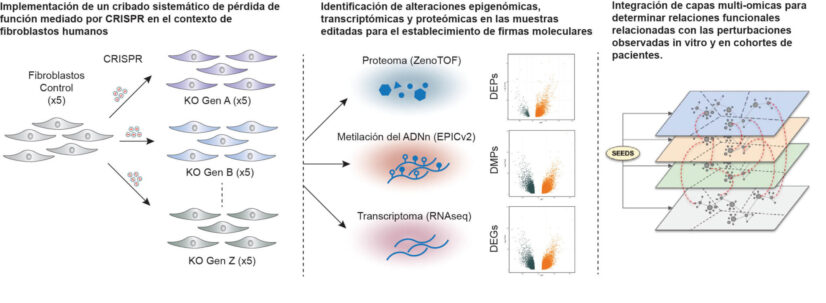
To overcome these barriers, the IMSignature project proposes the development of an in vitro platform based on genetically disrupted human fibroblasts. Fibroblasts exhibit homogeneous expression of clinically relevant genes (including neurological and metabolic genes), making them a robust model that is independent of the size of the patient cohort.
Using inborn errors of metabolism (IEMs) as a proof of concept, the initiative aims to create a scalable framework to optimise molecular diagnosis and generate transcriptomic and epigenomic atlases that will enable the discovery of new therapeutic targets.
Project Details
Call: Proyectos de Generación de Conocimiento 2025
Project Code: PID2025-176503OA-I00
Duration: 2026-2029
Funding: 206.250 €
PI: Juan Ramón Tejedor
Funding Ministry of Science, Innovation and Universities