ATLAS-Defining ALK2-Activin signaling axis in rare diseases
Abstract
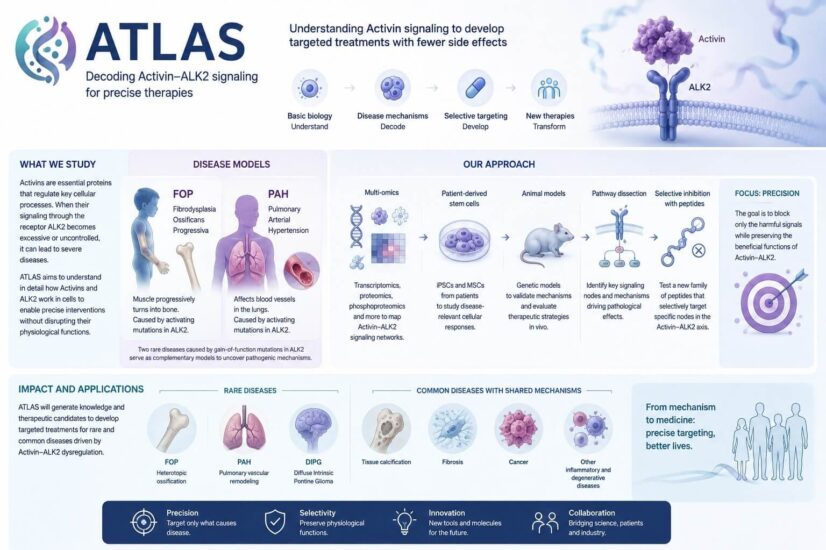
Activins are proteins that play an essential role in cell regulation; the body uses them to coordinate basic cellular functions, such as cell growth and specialisation. When their signalling fails, serious diseases can arise: cancer, cardiovascular problems and disorders affecting bones and muscles. However, blocking Activins throughout the body causes severe side effects. The ATLAS project aims to gain a more detailed understanding of how activins and their receptor ALK2 function at the cellular level, with the aim of finding more precise ways to correct their activity without disrupting the other functions that depend on them.
Approach and Methodology
To achieve this, the project focuses on two rare diseases that serve as model systems: Progressive Osifying Fibrodysplasia (FOP), in which muscle tissue progressively transforms into bone, and Pulmonary Arterial Hypertension (PAH), which affects the blood vessels in the lungs. Both are caused by genetic mutations that lead to the abnormal activation of the ALK2 receptor in response to activins, thereby disrupting the normal behaviour of cells in various organs.
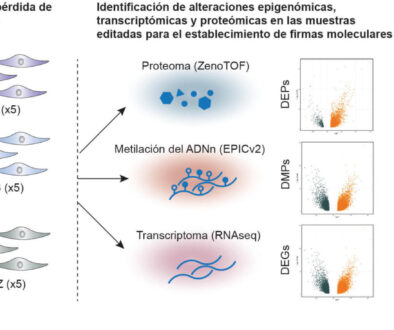
The team will combine several tools: omics techniques (which enable the large-scale analysis of genes, proteins or other molecules), stem cells obtained from patients, and animal models. These will be used to study the signalling pathways that activins activate within the cell, paying particular attention to the mechanisms that cause their harmful effects.
Furthermore, in collaboration with the pharmaceutical industry, a new family of peptides designed to selectively block some of the targets identified in this Activin-ALK2 pathway will be tested, thereby avoiding interference with the other normal functions of these proteins.
Impact and Applications
The knowledge and molecules generated by this project could serve as a basis for developing targeted treatments, both for rare diseases (FOP, pulmonary arterial hypertension and a type of paediatric brain tumour known as diffuse brainstem glioma) and for more common diseases that share similar mechanisms, such as tissue calcification, fibrosis or various types of cancer.
Project Details
Call: Proyectos de Generación de Conocimiento 2025
Project Code: PID2025-171196OB-I00
Duration: 2026-2029
Funding: 187.500 €
PI: Gonzalo Sánchez-Duffhues
Funding Ministry of Science, Innovation and Universities