The oxidative and carbonyl stress axis in anti-vascular endothelial growth factor-refractory neovascular age-related macular degeneration: Implications for therapeutic repurposing
Detalles de la Publicación
Revista: European journal of medicinal chemistry
Autores: Diana Carolina Castro-Fernández , Antonio Cañizo-Outeiriño, Antón L. Martínez, Andrea Cuartero-Martinez, Lorena Rodríguez-Martínez, Miguel González-Barcia, María Isabel Fernández-Rodríguez, María José Rodríguez-Cid, Maximino José Abraldes, Pablo Almuiña-Varela a d, María Purificación Mera-Yáñez d, Begoña de Domingo, María Gil-Martínez, María del Pilar Méndez-Cepeda, Belen Pazos-González, Francisco Goméz-Ulla, María Isabel Loza, Ignacio Ortea, José Brea, Jesús Mateos, Anxo Fernández-Ferreiro
Factor de Impacto: 6.1
Resumen
Background and purpose.
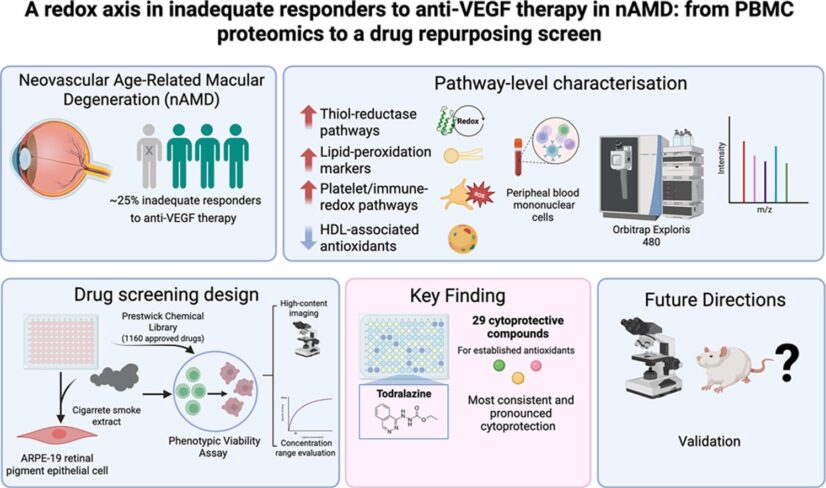
Neovascular age-related macular degeneration is a leading cause of irreversible blindness, and approximately 25% of patients respond inadequately to intravitreal anti-VEGF therapy, representing a major unmet clinical need. We aimed to identify repurposable therapeutic alternatives by anchoring a phenotypic screen in the molecular signature of inadequate responders.
Experimental approach.
The molecular phenotype of the disease was characterised by data-independent acquisition proteomic profiling of peripheral blood mononuclear cells from patients with an inadequate anti-VEGF response and from controls. Guided by this signature, the Prestwick Chemical Library (1160 approved compounds) was screened in ARPE-19 retinal pigment epithelial cells exposed to cigarette smoke extract. Cytoprotection was assessed by a primary viability assay and examined further by orthogonal high-content imaging of intracellular reactive oxygen species and by concentration-range evaluation.